



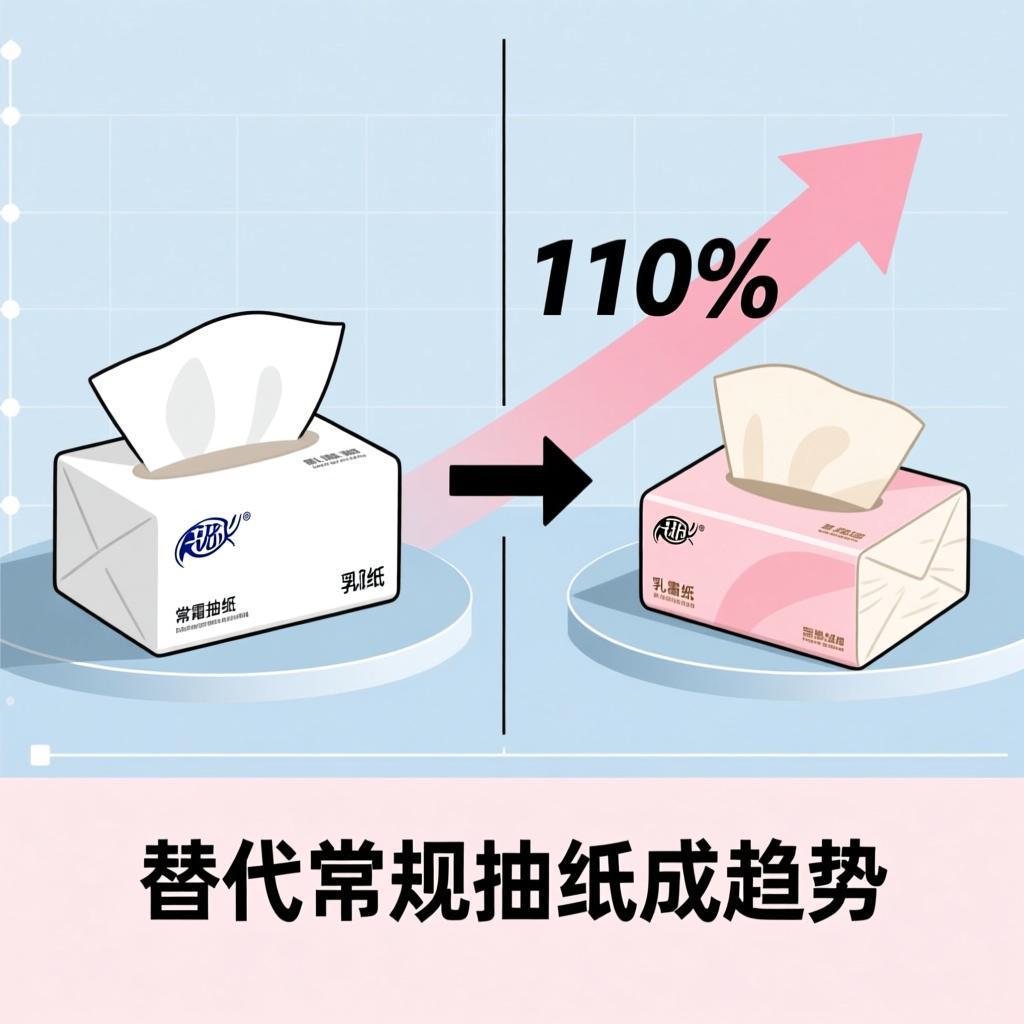
Lotion Tissue Becomes a "Must-have for Colds" with Over 110% Annual User Growth, Emerging as a Trend to Replace Regular Facial Tissues
Positioned as a gentle skincare essential, lotion tissue has surged in popularity in recent years, establishing itself as a niche standout in the household tissue market. E-commerce platform data reveals that in 2024, the number of consumers purchasing lotion tissue soared by 114% year-on-year, with sales volume jumping 132% over the same period. Thirty percent of consumers have already adopted it as a substitute for regular facial tissues, opting to stock up on a long-term basis. Research indicates that "wiping noses during colds" is the most frequent use case for lotion tissue (accounting for 63%), followed by facial cleansing (41%) and infant care (28%). Sales of lotion tissue peak significantly during dry winter months or seasonal transitions, earning it the nickname "cold essential must-have" among many consumers. Nearly 40% of consumers first tried lotion tissue out of curiosity for new products, and became loyal users after experiencing its soft, skin-friendly texture. In terms of consumer demographics, sensitive skin individuals, rhinitis sufferers, and families with infants constitute the core customer base, making up over 70% of total users; female consumers account for 82%, showing far higher acceptance of lotion tissue than males. In terms of pricing, lotion tissue targets the mid-to-high-end market, with individual pack prices ranging from a dozen yuan to several tens of yuan, 2-5 times that of regular facial tissues. Nevertheless, it has gained market recognition by precisely catering to specific usage scenarios.
The rise of lotion tissue is not merely a product category innovation, but also a symbol of the profound transformation of household tissue from "functional satisfaction" to "experience upgrading". Compared to regular facial tissues, the core advantage of lotion tissue lies in its infusion of moisturizing and skincare ingredients such as glycerin, squalane, and vitamin E. The tissue undergoes special softening treatment, delivering a silky, cream-like texture that minimizes friction and irritation on the skin. This effectively addresses common pain points associated with regular tissues, such as nose redness from repeated wiping, discomfort for sensitive skin users, and potential irritation to infants’ delicate skin. Nepia’s Nose 贵族 (Noble Nose) series lotion tissue incorporates imported moisturizing liquid and squalane essence, featuring a 7-layer structure that achieves a comprehensive enhancement in thickness, durability, and softness, making it the top choice for rhinitis sufferers. Zhihu’s Cloud Bear series cotton velvet lotion tissue utilizes high-quality Xinjiang cotton fibers and virgin wood pulp, further upgrading softness to suit the needs of mothers and infants. To meet diverse demands, enterprises have launched lotion tissue products in various specifications, including portable small packs (ideal for on-the-go use), large family packs (suitable for daily home use), and mini-packs (perfect for office desks). Industry insiders analyze that as consumers place increasing emphasis on skincare, the application scenarios for lotion tissue will expand further, potentially extending to skincare uses such as makeup removal and post-makeup blotting in the future. Currently, leading enterprises such as Hengan and Vinda have intensified their focus on the lotion tissue segment, seizing market share through technological R&D and capacity expansion. It is projected that the market size of lotion tissue will exceed 3 billion yuan in 2025, emerging as a core growth driver in the high-end household tissue sector.