



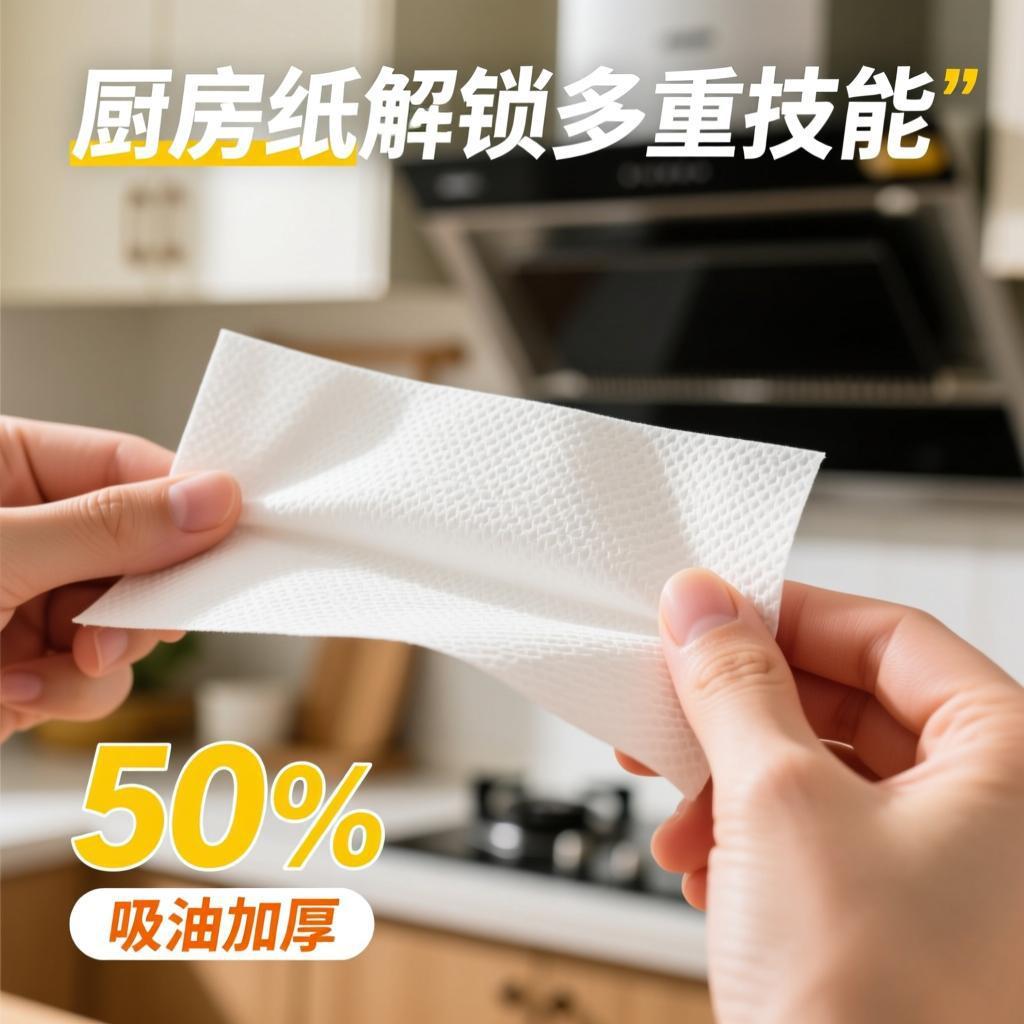
Kitchen Tissue Unlocks Multiple Functions, 50% of Consumers Willing to Pay Premium for "Oil-Absorbing and Thickened" Features
"Absorbing blood water when thawing meat, preventing water dripping during microwave heating, regulating humidity for vegetable preservation, wiping oil stains off kitchen countertops"—kitchen tissue is no longer just a simple "cleaning tool". Its diverse practical applications are continuously being explored by consumers, establishing it as an "all-around helper" in modern home kitchens. The newly released Kitchen Cleaning Tissue Consumption Research Report shows that cooking cleanup (72%), food preservation (45%), and tableware drying (38%) have become the three most frequent use cases for kitchen tissue. Consumers’ functional demands for kitchen tissue are becoming increasingly precise, with over 50% of consumers explicitly stating their willingness to pay a 10%-30% price premium for core features such as "strong oil absorption", "thickened durability", and "lint-free performance". Research finds that housewives are the core consumer group for kitchen tissue, accounting for 65%; as the proportion of men cooking at home rises, male consumers now make up 28%, with a greater focus on the cleaning efficiency of kitchen tissue. Consumer needs vary across different city tiers: first-tier city consumers prefer high-end thickened variants, prioritizing quality and environmental friendliness; consumers in sinking markets focus more on cost-effectiveness, with strong demand for basic products.
Reporters visited offline supermarkets and e-commerce platforms and found that major tissue product enterprises have carried out technological upgrades targeting the functional needs of kitchen tissue, with sales of kitchen tissue products adopting new drying technologies and layered embossing processes rising significantly. Vinda’s kitchen tissue utilizes Airflash technology, creating a porous internal structure through special processing, which increases water absorption capacity to seven times that of ordinary kitchen tissue, with an oil absorption rate of over 90%; Hearttex’s thickened kitchen tissue features a double-layer composite structure with a thickness of 0.12 millimeters, offering excellent toughness and resistance to tearing during wiping; Bambook has launched bamboo fiber kitchen tissue, leveraging the natural antibacterial properties of bamboo fiber, making it suitable for contact with food ingredients, while being biodegradable and environmentally friendly. According to user feedback, customer satisfaction with these high-end kitchen tissue products exceeds 80%, with a repurchase rate of over 60%. Beyond product upgrades themselves, industry professionals have shared numerous practical tips for using kitchen tissue: paired with baking soda and white vinegar, it can easily remove heavy oil stains from kitchen countertops and range hoods, being more environmentally friendly than chemical cleaners; wrapping freshly baked bread and pastries can absorb excess oil, resulting in a lighter taste; lining refrigerator drawers with it can absorb moisture and odors, requiring regular replacement; wrapping fresh vegetables and placing them in the refrigerator can regulate humidity and extend freshness. Industry insiders state that with the popularization of refined kitchen cleaning concepts, the kitchen tissue market will continue to expand, with a projected market size of 8 billion yuan in 2025. In the future, enterprises will further innovate in directions such as biodegradability and multi-functionality.