



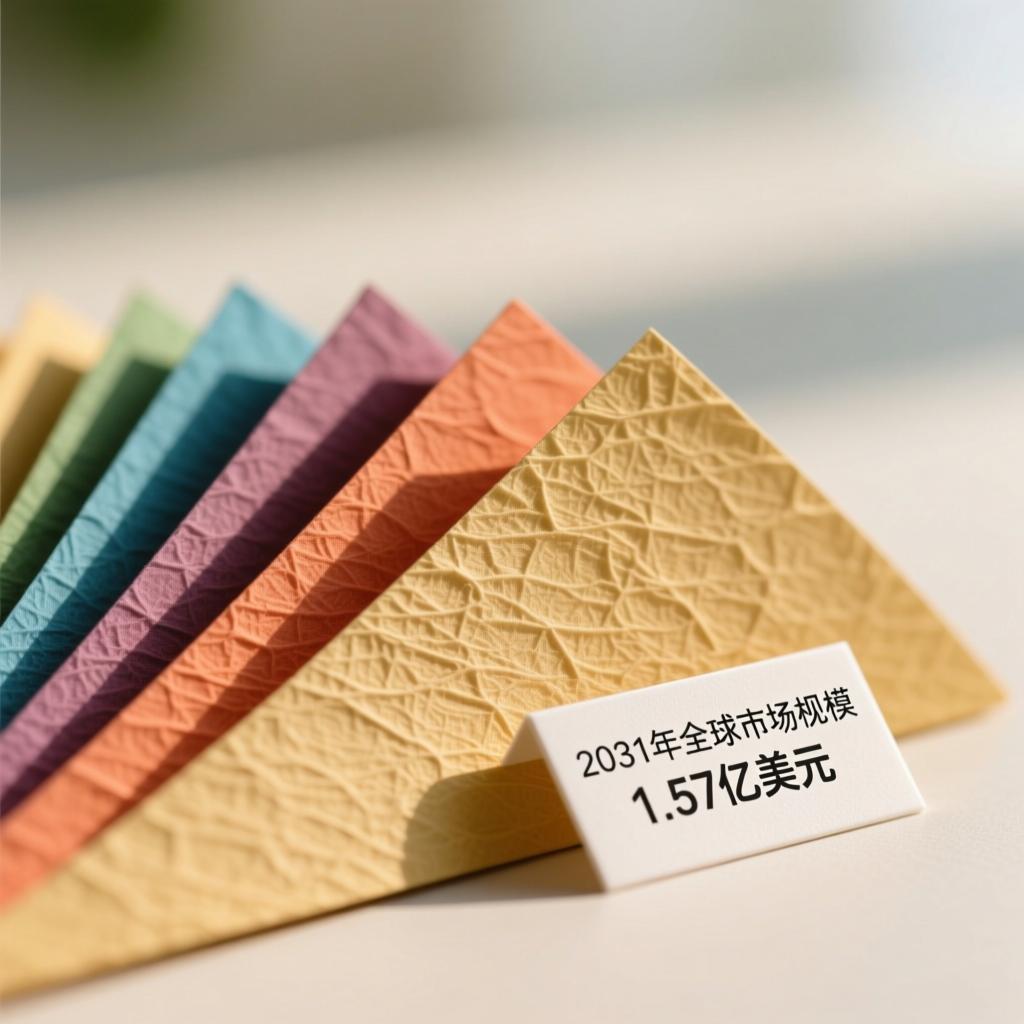
Colored Wood-Free Tissue Gains Popularity, Global Market Size Expected to Reach 157 Million US Dollars by 2031
Driven by the tightening of global environmental policies and domestic consumption upgrading, colored wood-free tissue made from raw materials such as bamboo fiber, bagasse, and reeds has gradually entered the household consumption market, gaining consumer favor with its dual advantages of "environmental protection + aesthetic appeal". According to forecasts by an internationally renowned industry research institute, the global colored wood-free tissue market will expand at a steady annual growth rate of 12% from 2025 to 2031, with market sales expected to exceed 157 million US dollars by 2031. The Asia-Pacific region will contribute over 60% of the growth, with China serving as the core growth engine. Traditional wood pulp tissue not only relies on wood resources but also carries potential safety risks such as bleach residues in some products. In contrast, colored wood-free tissue uses agricultural waste or fast-growing plants as raw materials, achieving "zero deforestation" from the source, aligning with the "dual carbon" development goals. Meanwhile, it adopts natural plant pigments for coloring without adding chemical dyes, resulting in higher color saturation and biodegradable properties. After disposal, it can decompose naturally in the environment within 3-6 months, posing no harm to the ecosystem.
Currently, a number of domestic enterprises have laid out plans in the colored wood-free tissue sector, breaking through cost and performance bottlenecks through technological innovation. A bamboo fiber tissue product enterprise has launched bamboo fiber colored facial tissues, using a mixed raw material of bamboo pulp and bagasse pulp combined with independently developed natural dyeing technology. This has controlled product costs to within 1.2 times that of traditional wood pulp colored tissue, while ensuring that tissue softness and toughness meet standards. Since its launch, the product has quickly become a hit item, with monthly online sales exceeding 100,000 packs, mainly used in scenarios such as daily household wiping, holiday decorations, and children’s crafts. Another enterprise has launched fluorescent-free colored cotton soft towels targeting the maternal and infant market, using food-grade natural pigments and passing multiple safety tests, gaining recognition from numerous families with infants. In terms of consumer demographics, young consumers aged 20-35 are the core audience for colored wood-free tissue, accounting for 70%, who prioritize the product’s environmental attributes and aesthetic appeal; consumers aged 46-55 show a higher preference for unbleached wood-free tissue, with their acceptance of colored variants gradually increasing. Industry experts remind that when purchasing colored wood-free tissue, consumers should pay attention to product certification labels, prioritizing products with FSC Forest Certification and food contact tissue safety certification to avoid purchasing inferior products with added chemical dyes. At the same time, it is recommended to choose appropriate materials based on usage scenarios: for kitchen use, bamboo fiber materials are preferred for their superior toughness; for daily wiping, bagasse pulp materials offer better cost-effectiveness. With technological maturity and capacity expansion, the prices of colored wood-free tissue will further decline in the future, and market penetration is expected to increase significantly.